
There comes a point in the life of many great software businesses when the question changes. It’s no longer whether the model works, but how far it could go.
You’ve built a good product, customers keep coming back, revenues are growing and the team knows the market inside out. But getting to the next stage of growth is a very different challenge from getting it off the ground in the first place.
Sometimes the gap is capital. Sometimes it’s expertise, whether that’s making sales more predictable, working out where AI fits or opening up new markets. Often, it’s simply bandwidth.
At that point, the options can look surprisingly limited. Leaders are often left with a near-binary choice: keep going alone and stretch what they have, or sell to a buyer that will fold the company into something bigger and run it to a standard playbook.
The market is making that choice harder. PwC found that £134.7 billion was deployed into UK M&A in the first half of 2026, more than double the previous year, while deal volumes fell by almost 13%. Money is concentrating in fewer, larger bets, with buyers becoming increasingly selective. EY points to a similar shift in software, where AI is raising the bar on what buyers consider differentiated and defensible.
But size isn’t the same as potential. Vertical software companies often have something much harder to build: deep knowledge of a market and the problems within it. They understand their customers’ workflows, regulation and frustrations because they’ve lived with them for years. That knowledge is hard for a generalist, or an AI model, to replicate and, used well, AI makes it more valuable. These companies deserve better options.
That’s why Elona Mortimer-Zhika and I created Elevare Software Group, a long-term partner for vertical software and tech-enabled services businesses. We’ve sat in the founder’s chair ourselves. Together we built IRIS Software Group and sold it for $4 billion, completing more than 30 acquisitions along the way. We know what it takes to scale, and what it feels like to stand at that crossroads.
Elevare is built on that experience, pairing long-term capital with a team that has operated, grown and acquired software businesses. Money creates options, but it doesn’t tell you how to make growth more repeatable, which senior hire will make the biggest difference, where AI can create real value or when an acquisition might accelerate the journey. Those are operating decisions, and they get harder as a company grows.
We bring support in only where it’s needed. For one business, the priority might be product or technology; for another, sales, people or M&A. Sometimes the most useful thing is recognising what already works and leaving it alone. Scaling shouldn’t turn a company into something its founder no longer recognises. Structure should remove friction, not the entrepreneurial energy that made it worth backing.
Our first investments, in Rubixx and Voicescape, show this in practice. Both serve UK social housing, where regulation is demanding, the stakes for residents are high and software must fit the way housing teams work. Housing is the first of several sectors we plan to invest in.
Behind every business is a founder’s story, and it’s far more personal than valuations and term sheets suggest. A founder may have spent 15 or 20 years building their company. They remember the first customer who said yes, the people who joined before success was certain and the hard moments nobody outside ever saw. Their reputation, relationships and often much of their wealth are bound up in it.
That’s why optionality sits at the centre of how we work. Some founders want to stay and keep building. Others want to accelerate growth with more firepower behind them. Some want a partial exit, taking value off the table while remaining involved, while others plan, in time, to step away and hand over to the next generation of leaders.
Each ambition deserves a different answer, so our model flexes around the company and its people rather than forcing everyone down the same path. We see that as good business, not the soft side of investing.
All of this comes back to one question Elona and I kept asking while designing Elevare: as operators, what kind of partner would we have wanted?
People who respected what we’d built and understood the weight of running a company. People who had scaled teams, made acquisitions, entered new markets, got things wrong and learned from them. Experience rarely supplies every answer, but it does sharpen the questions. And people with real ambition for the business, plus the judgement to know when to help and when to hold back.
There are ambitious specialist software and tech-enabled services businesses that have proved their model but haven’t yet realised their full potential. They’ve already done the hardest part: creating something customers value. They don’t need reinventing. They need someone who respects what they’ve achieved, understands where they want to go and brings the capital and expertise to help them get there.
That’s what we would have valued as operators ourselves, and it’s what we’ve set out to build.
If you’ve built an ambitious software or tech-enabled services company and are considering its next chapter, we’d love to hear your story. Get in touch at enquiries@elevaresoftware.com.
Next in the series: Buying businesses is easy. Building them is harder.
Next time, I’ll look at what happens after we invest and how to help a successful company go further without losing what made it special.
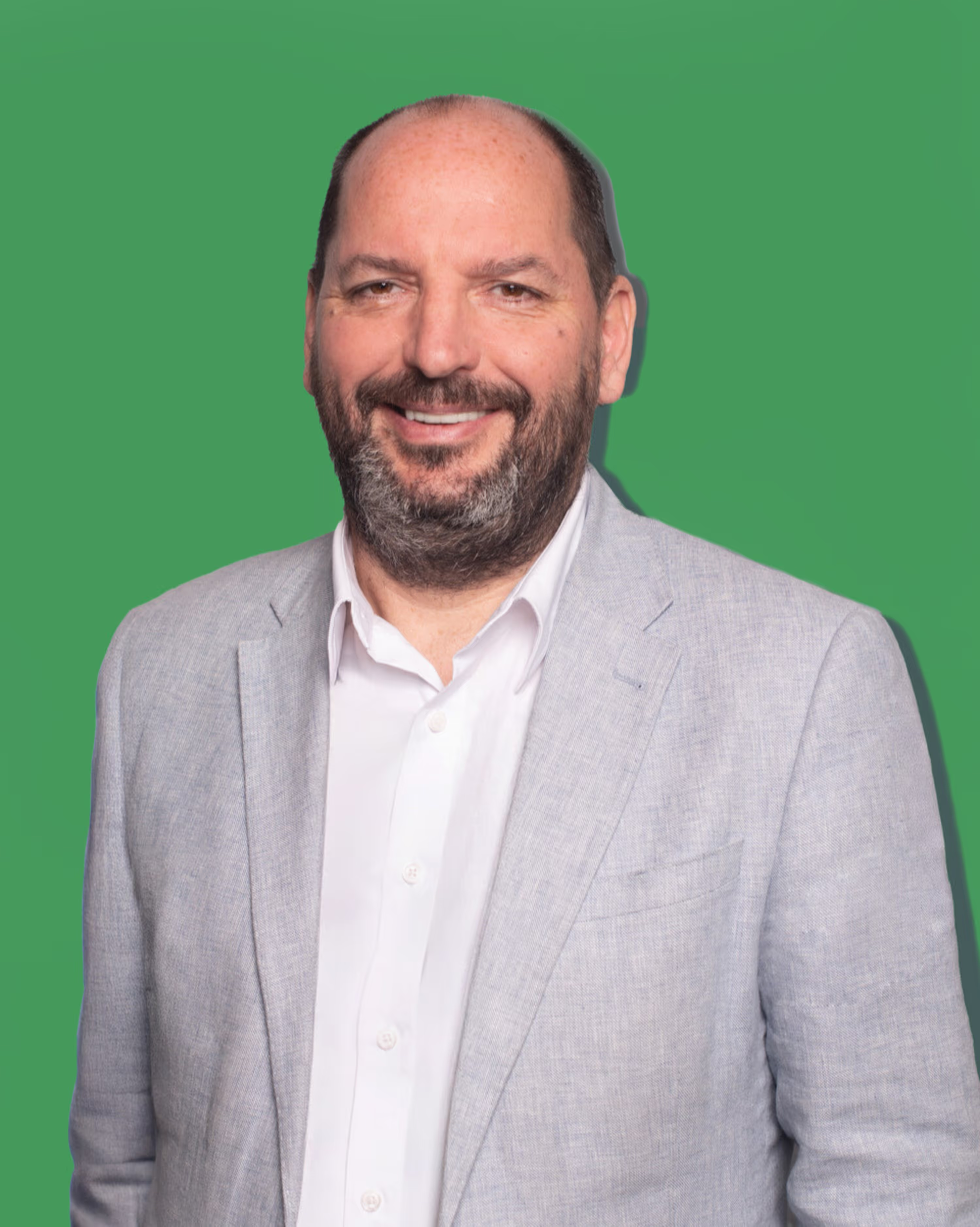
David Lockie is CEO of Elevare Software Group, where he sets Group strategy and partners with founders and management teams to build category-leading software businesses.

If you run a software company and are considering your next chapter, we’d love to hear from you.
enquiries@elevaresoftware.com